
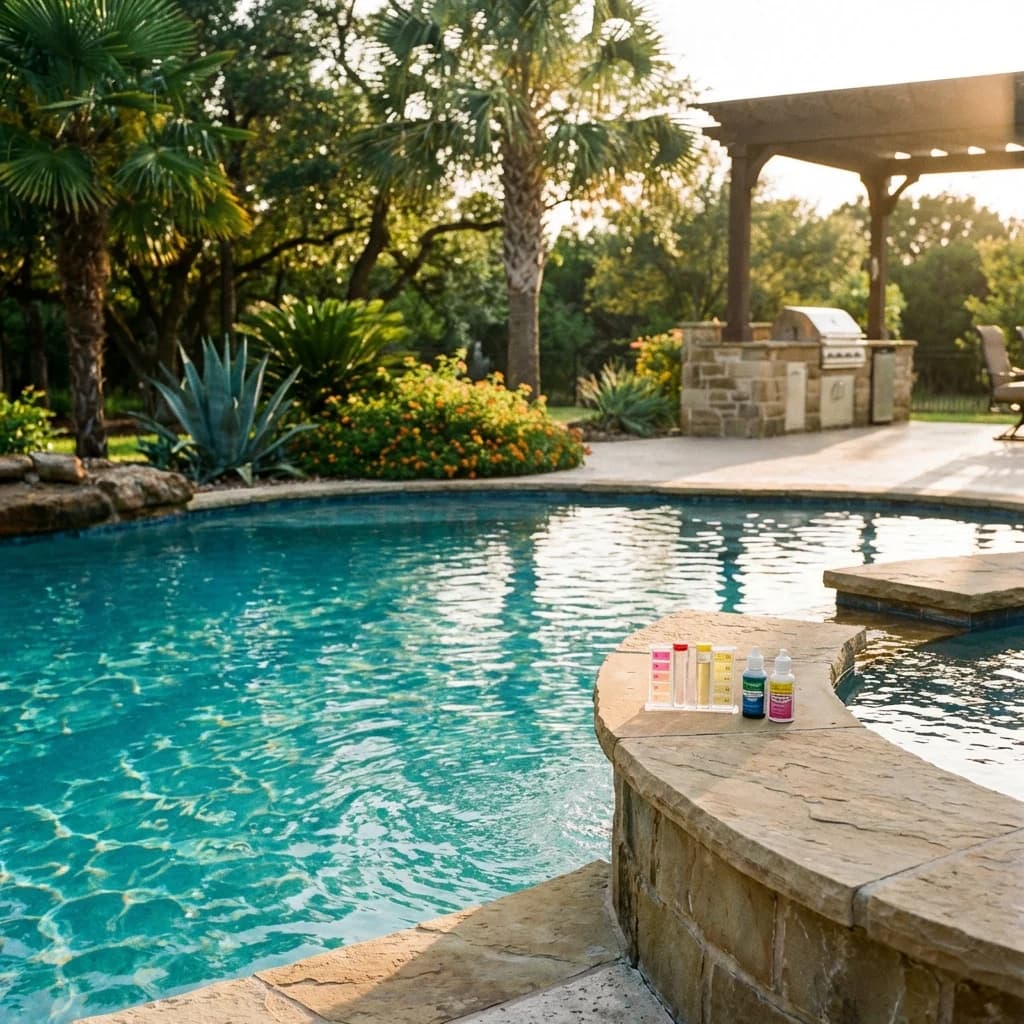
For homeowners in Central Texas, a backyard pool serves not just as a refreshing oasis during the sweltering summer, but also as a cherished gathering spot for family and friends. However, with the arrival of warmer months comes the essential responsibility of effective pool maintenance.
Understanding the often unpredictable Central Texas climate is the key to creating an effective pool care routine. From scorching heat waves to sudden storms, each season introduces specific factors that can impact your pool's water quality and overall health. In this comprehensive guide, we'll delve into practical pool maintenance tips designed specifically for this dynamic environment.
Hot Weather Alert
Temperatures above 100°F increase evaporation. Check water levels daily during summer months.
Hard Water Challenge
Central Texas water has high mineral content. Test weekly for scaling and cloudiness.
Understanding the Central Texas Climate
Central Texas is known for its unique climate, characterized by hot summers and mild winters, presenting both opportunities and challenges for pool maintenance. During the scorching summer months, temperatures can soar above 100°F, which often leads to increased evaporation and a higher demand for water balance.
Seasonal variations mean homeowners should adapt their maintenance routines throughout the year. In fall, the influx of leaves leads to increased debris accumulation, necessitating more frequent skimming and cleaning. Temperature fluctuations can also affect pH level management.
The hard water effects commonly found in the region can complicate pool maintenance efforts. High mineral content in local water sources can lead to scaling and cloudiness, making it essential to regularly test and adjust water chemistry.
Regular Water Testing
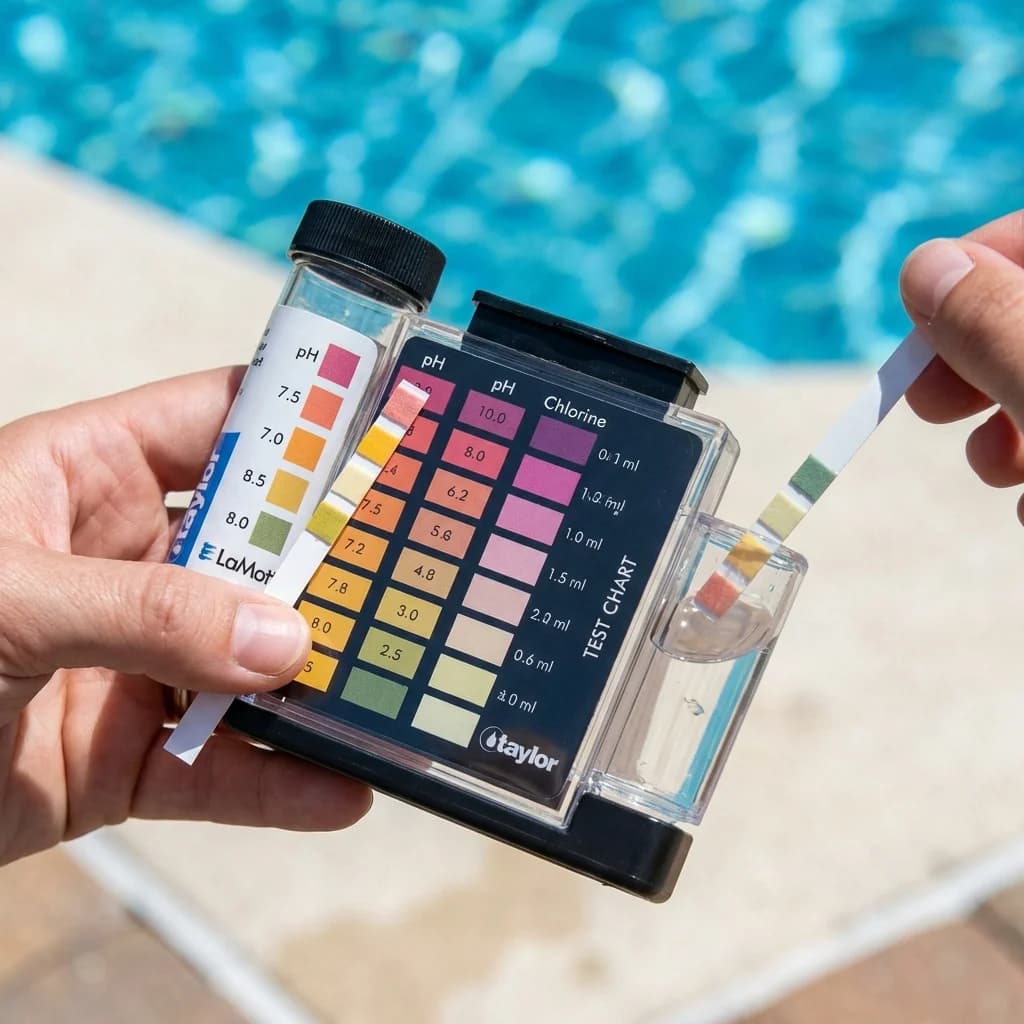
Regular water testing is a cornerstone of effective pool maintenance, especially in the unique climate of Central Texas. Understanding how to accurately test for pH, chlorine, and alkalinity levels is essential for maintaining a healthy pool.
Ideal Pool Chemistry Levels
During hot summer months when pool usage peaks and evaporation rates increase, testing becomes even more critical. Check these levels at least once a week during peak swimming season, and perform thorough checks after heavy storms or significant weather changes.
Dealing with Algae Growth
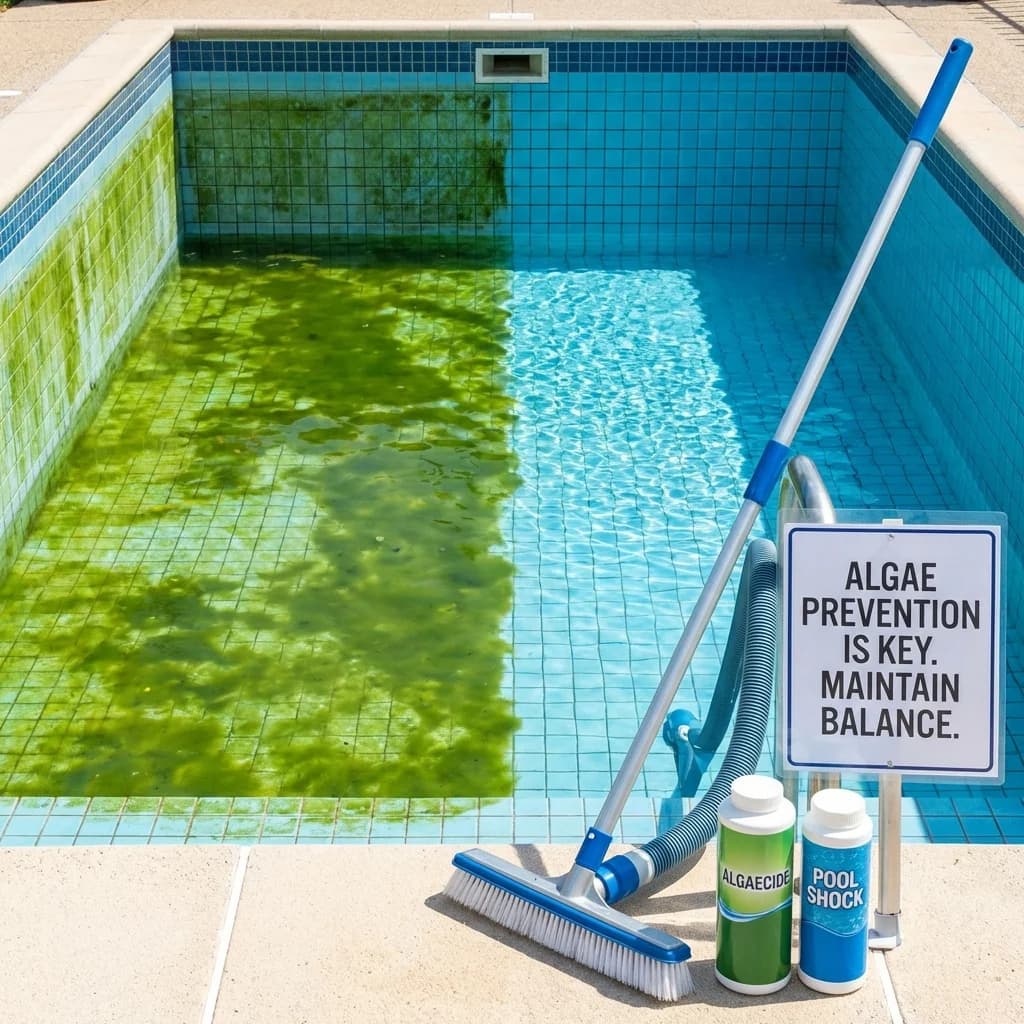
Algae can be a persistent issue for Central Texas pool owners, especially given the region's warm temperatures and ample sunshine. Common signs include green, yellow, or black spots on pool walls and floor, as well as cloudy water.
Quick Algae Treatment Protocol
- 1Shock the pool with a higher dose of chlorine to effectively kill algae.
- 2Brush affected areas to remove stubborn algae clinging to surfaces.
- 3Run the filter continuously for at least 24 hours to clear the water.
- 4Add algaecide as a preventive measure for ongoing protection.
Keeping Debris at Bay
With Central Texas's warm climate and abundant vegetation, leaves, twigs, and pollen frequently find their way into pools. Establishing a daily skimming routine is essential—just a few minutes each day can keep your water crystal clear.
Using pool covers during high debris seasons, particularly in fall, can significantly reduce cleaning efforts. A well-fitted mesh cover allows water to drain while keeping larger particles out, also helping maintain water temperature and chemical levels.
Filter Maintenance
Sand Filters
- • Backwash every 4-6 weeks
- • Lifespan: 5-7 years
- • Low maintenance
Cartridge Filters
- • Clean every 2-4 months
- • Lifespan: 2-5 years
- • Easy to remove & clean
DE Filters
- • Most efficient filtration
- • Refill DE powder regularly
- • Longest lifespan
Pro Tip:Check your filter's pressure gauge regularly. If the gauge indicates a pressure difference of 8-10 psi compared to normal operating pressure, it's time for a cleaning.
Winterizing Your Pool
Winterizing your pool in Central Texas may not be as daunting as it sounds, especially given the milder winters compared to other regions. The first step is to clean the pool thoroughly, removing debris, vacuuming the bottom, and ensuring sanitizer levels are balanced.
Lower the water level below the skimmer to prevent freezing damage. While Central Texas doesn't typically experience prolonged freezing, adding antifreeze to plumbing lines provides extra protection against unexpected frost spells.
A quality pool cover is essential—not just for keeping debris out, but also for minimizing evaporation and protecting the pool's surface. Proper winter maintenance can prolong the life of your pool equipment, saving you time, money, and effort down the road.
Need Professional Pool Maintenance?
While these tips will help you maintain your pool, sometimes you need expert assistance. Our Central Texas pool professionals are ready to help with any maintenance, repair, or emergency services.