
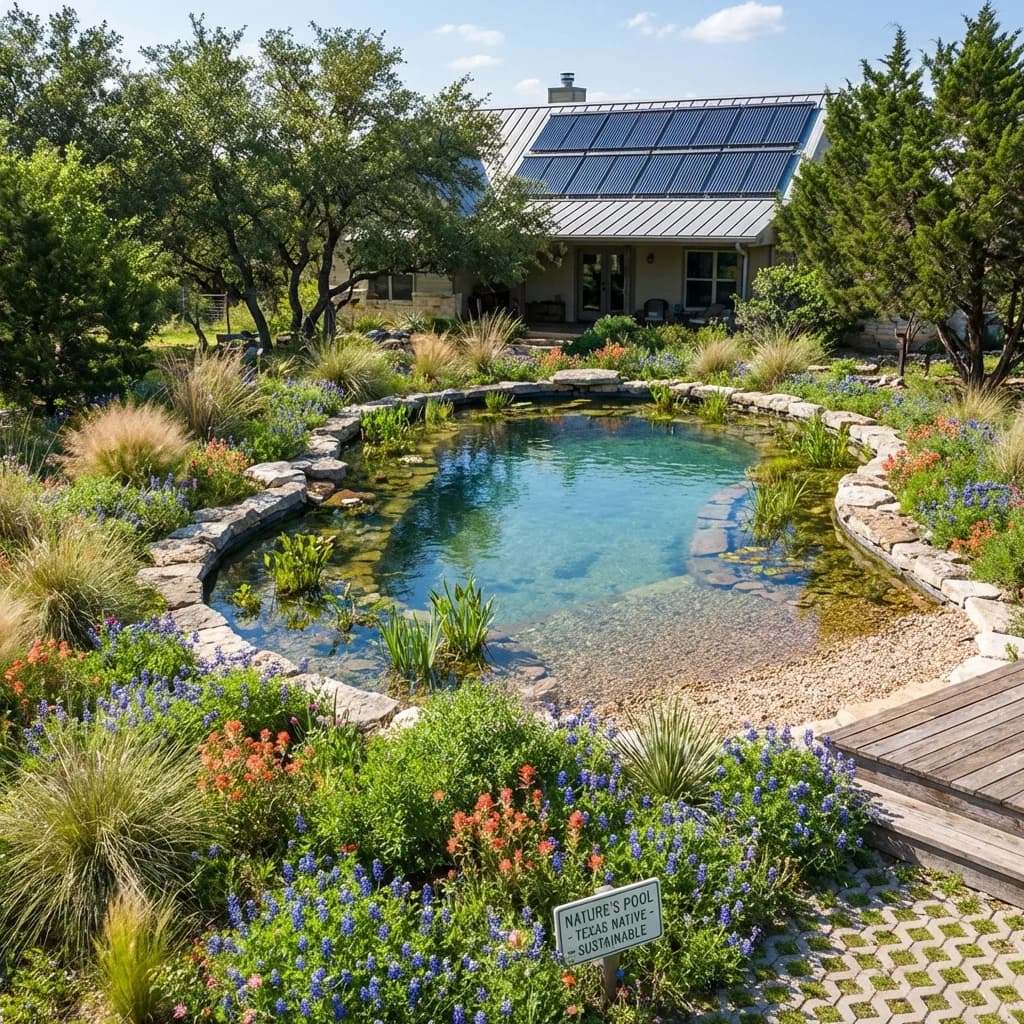
Eco-friendly pool care in Central Texas should focus on the changes that actually save water, energy, and long-term repair costs. In practice, that usually means catching leaks early, reducing unnecessary evaporation, choosing efficient equipment, and avoiding maintenance shortcuts that create bigger problems later.
The most useful sustainability choices are usually the boring ones: stop wasting treated water, keep the system running efficiently, and avoid overcorrecting chemistry because the pool was not monitored carefully in the first place.
Quick answer: where should homeowners start?
Stop water waste first
Leak repair and evaporation control usually save more water than any trendy product swap.
Use efficient equipment well
A variable-speed pump and a clean filter help when they are maintained and programmed correctly.
Avoid wasteful guesswork
Accurate testing and repair-first decisions beat repeated chemistry adjustments that do not solve the real problem.
Which eco-friendly pool steps actually save money and water
The best eco-friendly pool strategy is the one that reduces waste without making the pool harder to maintain. In Central Texas, that means respecting heat, evaporation, long swim seasons, and the cost of keeping a poorly running system going.
- Fix leaks quickly so treated water is not being replaced again and again.
- Use a pool cover when practical to reduce evaporation and keep debris out of the water.
- Run efficient equipment, especially a properly programmed variable-speed pump.
- Keep filters clean so the system does not work harder than necessary.
- Test water accurately before adding chemicals so you are not overcorrecting every reading.
Which “green” pool ideas are mostly hype
Homeowners often spend too much time chasing low-impact product swaps and not enough time fixing the obvious waste. Eco-friendly pool care is mostly about efficiency and prevention, not novelty.
- Treating every new “green” chemical product as a substitute for proper testing and sanitation.
- Assuming saltwater means chemical-free maintenance. Salt systems still create chlorine and still need balance.
- Trying household-product shortcuts instead of a real pool chemistry plan.
- Focusing on small accessory purchases while ignoring a leak, dirty filter, or failing plumbing connection that is causing the real waste.
Why leak detection is one of the most important water-saving steps
If your pool is leaking, every refill adds more treated water, more chemical demand, and more equipment run time. That is why one of the most environmentally responsible services you can book is accurate leak diagnosis followed by the right repair.
It is usually better to confirm the source once than to keep adjusting timers, chemistry, or water level while the real loss continues underneath the surface.
When efficiency problems point to repair issues instead of routine maintenance
Some “efficiency” complaints are actually repair symptoms. A pool that keeps losing water, pulling air, or struggling to circulate is not always asking for another maintenance tweak. It may be telling you a leak, line problem, or connection failure needs attention first.
- The pool needs refill more often than the weather alone can explain.
- The water level keeps stopping at the same spot instead of dropping randomly.
- Returns are weak, the pump is pulling air, or the equipment pad stays damp.
- You are trying to “improve efficiency,” but the same water-loss or circulation issue keeps coming back.
Frequently asked questions
What eco-friendly pool changes matter most in Central Texas?+
The biggest wins are fixing leaks quickly, reducing evaporation, running efficient equipment, and keeping the pool balanced so you do not waste water, chemicals, and energy correcting avoidable problems.
Does fixing a leak save more water than changing chemicals or equipment?+
In many cases, yes. A hidden leak can waste far more water than small chemistry or equipment adjustments ever save, which is why leak diagnosis is one of the highest-impact eco steps.
Are most eco-friendly pool products worth it?+
Not always. The practical improvements are usually covers, efficient pumps, good filter maintenance, accurate testing, and repair-first decisions. Many trendy add-ons promise more than they actually save.
When should I call for an inspection instead of trying another maintenance tweak?+
If the pool keeps losing water, circulation is weak, the equipment is pulling air, or a suspected efficiency issue keeps returning, it is usually time for inspection or repair rather than another round of maintenance experiments.
Pool leak repair
One of the highest-impact water-saving services when your pool is losing more water than it should.
Travis County service area
Explore local pool leak and repair coverage for Austin and nearby Travis County communities.
Related maintenance guide
Read our broader Central Texas maintenance guide for practical routine care alongside efficiency upgrades.
Contact Centex Pool Repair
If you want the lowest-waste fix first, contact us for a clearer diagnosis and repair plan.